

Clean cooking changes address: the Clean Cooking Alliance joins the IEA and LPG goes to COP31
Since 2 November 2026, the Clean Cooking Alliance has been an initiative hosted by the International Energy Agency, with a secretariat in Paris. The same day, the global LPG association asked COP31 in Antalya to recognise cooking gas in climate policy, and Nigeria was due to present its national cylinder registry there on 12 November. The conference closed on 22 November without an overall agreement, and the clean cooking track continues at the Nairobi summit on 27 and 28 January 2027. Clean cooking is entering energy policy, and its new interlocutors ask for data.
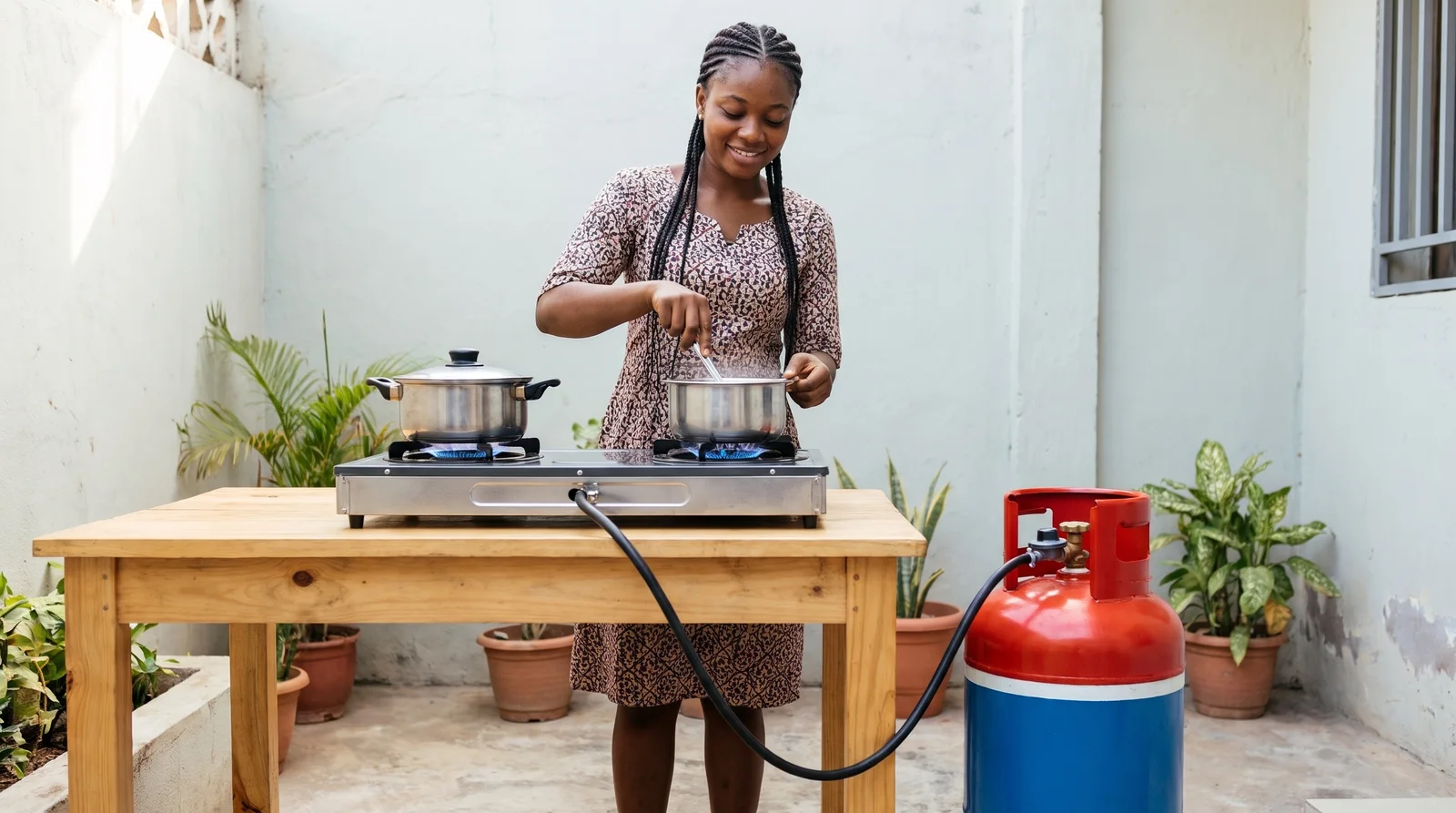
What changed for the Clean Cooking Alliance on 2 November?
The Clean Cooking Alliance (CCA) has left the United Nations Foundation, its host for fifteen years. Since 2 November 2026, it operates as a multilateral initiative hosted by the International Energy Agency (IEA), with a secretariat setting up in Paris (Clean Cooking Alliance, effective 2 November 2026). The operational transition runs through the second quarter of 2027.
Dymphna van der Lans, who leads the secretariat at the IEA, sums up the aim: to turn the political attention clean cooking has earned into concrete progress. Fatih Birol, the IEA's Executive Director, calls universal access “achievable”, provided there is sustained leadership and investment.
The change is not only administrative: the IEA advises energy ministers and talks to development banks. The stove and the cylinder become an energy question, studied with tools that ask for data from the field.
Why did the LPG industry write to COP31?
To have LPG recognised in climate and energy policies. On 2 November, the World Liquid Gas Association (WLGA) published a call to the COP31 Presidency and the Parties, co-signed by the Turkish bodies TLPGA and TOBB LPG Council and by Gas Energy Australia (WLGA, 2 November 2026). The text cites the switch from biomass to gas for cooking in Africa among the uses already in service, and calls for more public and private finance for clean cooking, LPG included.
Its title speaks of benefits already tangible for millions of people: the vocabulary of climate-linked financiers, for whom a benefit counts if it can be measured.
What was Nigeria due to present in Antalya on 12 November?
Its National Cylinder Recirculation Programme (NCRP). At the 2026 conference of the Nigerian Alliance for Clean Cooking in Abuja, the Standards Organisation of Nigeria (SON) described its parts: a national digital registry, a unique identity linked to a QR code for every cylinder, inspection at authorised requalification facilities, withdrawal of non-compliant cylinders, with a target of at least 43 million certified cylinders and 42 requalification centres (The Sun, 7 November 2026; see our article on Nigeria's registry). The programme was due to be presented at COP31 on 12 November; we have found no report of it.
Two contributions stand out. Femi Oye, FuelTree's chief technologist, speaking on behalf of its managing director, presented data transparency as the cornerstone of capital mobilisation: “whatever you cannot track and record, you cannot measure”, and without verified data there is no bankable pipeline.
Joseph Aigbedion, founder of Falcon Corporation, recalled that building “15,000-tonne terminal depots” is only the first step, and that “the real challenge has always been arterial distribution” (see our article on the last mile).
How did COP31 end?
Without an overall agreement. Scheduled for 9 to 20 November in Antalya, the conference ended on 22 November, after a dispute over fossil fuels (BBC News, 22 November 2026). The industry's request, to recognise LPG, a gas derived from oil and natural gas, thus reached a conference that stumbled over precisely that subject.
The clean cooking track continues. On 12 November in Antalya, leaders sought to accelerate its progress in Africa ahead of the Nairobi summit on 27 and 28 January 2027. The IEA said that day that more than a third of the funding pledged at the Paris summit in 2024 had been deployed (IEA, 12 November 2026).
On the ground, is safety still about cylinders?
Yes, it is decided in the street. On the night of 7 to 8 November in Yamoussoukro, the national operation of Côte d'Ivoire's Directorate General of Hydrocarbons seized more than 1,600 butane cylinders and about ten machines used to transfer subsidised household gas into vehicle tanks (Afrik Soir, 8 November 2026, in French). The ministry speaks of fire and explosion risks for residents and is running awareness campaigns in several towns, including Bouaké, Daloa and Korhogo.
The lesson holds for Cameroon: a cylinder that leaves the household circuit is both a hazard and a diverted subsidy.
And for Cameroon?
Cameroon's industry is above all changing interlocutors: an energy analysis agency, financiers who speak of measurable benefits, a neighbouring country that came to COP with a cylinder registry. Registries follow the cylinder when it passes through the industry's hands: at filling, inspection and exchange. They say nothing about the weeks it spends in the kitchen, nor about the moment it will run empty, while the refill shows whether a household stays on gas (see our article on what Nigeria says about the refill).
That is the measurement MyGaz produces. The UltraSense sensor estimates the gas level from under the cylinder, the UConnect box sends the reading over the mobile network, and the MyGaz app shows the household the level and an estimate of the days left, so the refill is ordered in time. With MyGaz Pro, the delivery agency and its riders see the need coming, and the web console gives distributors a view of actual use by neighbourhood: the verified data Abuja spoke of, at the scale of the kitchen. MyGaz measures the gas level, not leaks: safety rests on compliant cylinders, licensed filling plants and the good habits set out on our gas safety page.
What to watch
ARDA's LPG Forum, co-hosted with the WLGA, takes place in Dar es Salaam from 24 November. The Nairobi summit follows, on 27 and 28 January 2027. In Kribi, SCDP announced on 13 October the terminal's foundation stone “probably before the end of this year 2026” (SCDP, 13 October 2026, in French), then called it “imminent” on 12 November (SCDP, 13 November 2026, in French); as of 23 November, no ceremony had been announced. The MyGaz pilot network continues in Yaoundé with delivery agencies; interested distributors can write to the team from the Contact page.
Sources
Clean Cooking Alliance, “The Clean Cooking Alliance Begins a New Chapter at the International Energy Agency”, effective 2 November 2026.
World Liquid Gas Association, “Liquid Gas is not simply a future solution. It is delivering tangible benefits to millions of people today”, 2 November 2026.
The Sun (Nigeria), Henry Uche, “FG moves to flush out unsafe gas cylinders…”, 7 November 2026.
BBC News, “COP31 climate talks end with no deal after fossil fuels row derails hopes of agreement”, 22 November 2026.
IEA, “Leaders at COP31 seek to accelerate clean cooking progress in Africa ahead of Nairobi summit”, 12 November 2026.
Afrik Soir, “Yamoussoukro : plus de 1 600 bouteilles de gaz saisies dans une opération anti-fraude” (in French), 8 November 2026.
SCDP, “La SCDP se tourne vers Kribi” (in French), 13 October 2026.
SCDP, “Sud Forum 2026, le futur dépôt pétrolier de Kribi en vitrine” (in French), 13 November 2026.
Read next
All news “Subsidise access, not consumption”: what Nigeria says about the refillAt the 16th NLCGA conference, in Abuja on 4 and 5 November 2026, Audrey Joe-Ezigbo (Falcon Corporation) proposed subsidising access to gas rather than its consumption, and judging every programme by one measure: does the household that was helped still refill its cylinder, on its own, 24 to 36 months after support ends. On 21 November, Anthony Agbo (Unigas) pointed out that 96% of Nigeria's LPG receipts in September came from domestic producers, with stock cover of 15.9 days against a 30-day minimum. In Cameroon, the press disagrees on the Bamenda gas filling centre, inaugurated on 9 May 2025. Everywhere, the missing figure is the refill at household level.
 Bipaga at 200 tonnes, Bonabéri in thirty months: Cameroon's household gas between two supply chainsThe Bipaga plant, Cameroon's only local source of household gas, produced 200 tonnes of LPG in October 2026 according to data provided to Investir au Cameroun, against an average of 1,800 tonnes a month from May to September. On 11 November, SCDP held the kick-off meeting for the Bonabéri LPG hub, due to be operational in a little under thirty months, and on 12 November it called the foundation stone of the Kribi terminal imminent. Until then, the gas in Cameroon's kitchens arrives almost entirely by ship and goes through today's depots.