

UltraSense and UConnect: how the gas reading reaches the app
MyGaz measures the level of a household gas cylinder without touching the gas. The UltraSense sensor, placed under the cylinder, estimates the level by ultrasound. The UConnect box receives the reading and sends it over the mobile network to the MyGaz platform, which shows it to the household in the MyGaz app and to the delivery agency in MyGaz Pro. Here is each step, and what happens when the network drops.
Why is it hard to know what is left in a cylinder?
A steel gas cylinder is opaque. To know what is left, people lift it, weigh it, or wait for the flame to weaken. None of these methods warns the household a few days ahead, and none tells the delivering agency anything.
A solution therefore has to measure from the outside, without modifying the cylinder. In Cameroon, the cylinder belongs to the marketer and passes from one customer to the next at each exchange, under the recirculation model described by Bruce et al. (2018). The sensor must be able to move from one cylinder to the next without special tools or any work on the valve.
Step 1: UltraSense estimates the level by ultrasound
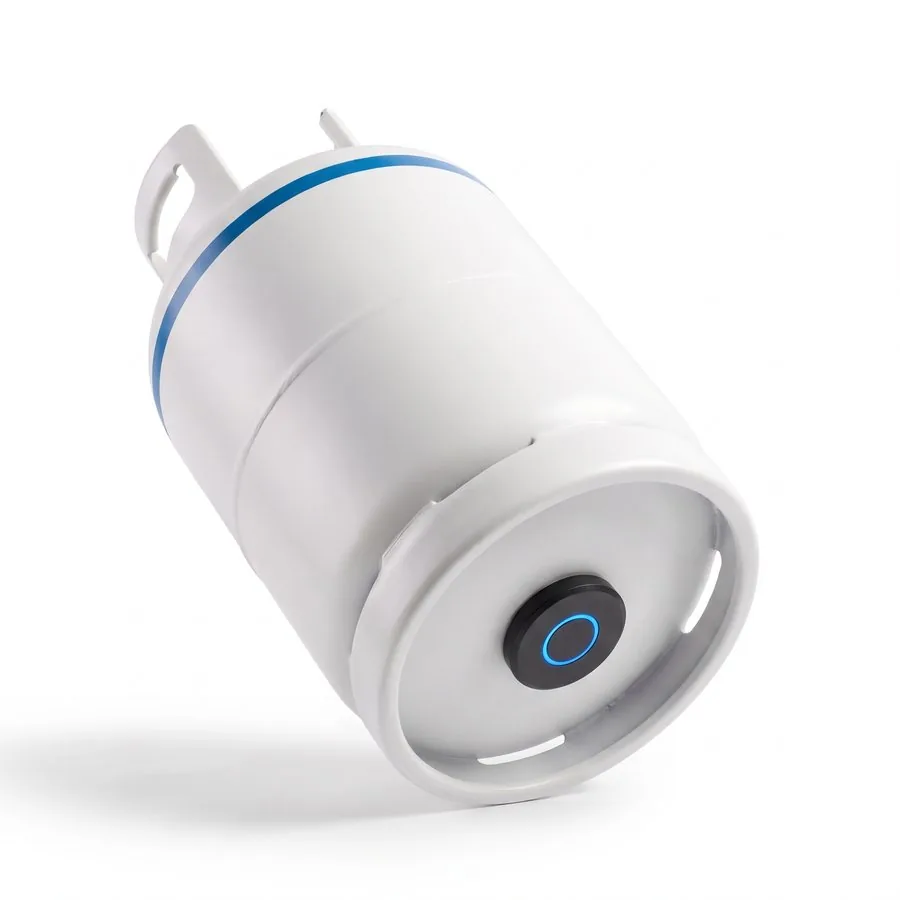
UltraSense is a small disc placed under the cylinder. It sends an ultrasound pulse that crosses the steel base, travels up through the liquid gas and reflects off the surface of the liquid. The time the echo takes to return gives the height of the liquid, and so an estimate of the gas level. The sensor never touches the gas and drills nothing.
The sensor runs on a battery and does not depend on the home's mains power. It follows the cylinder: from one refill to the next, the cylinder is recognised. It measures the level, not leaks.
This principle, non-intrusive ultrasound measurement from under the tank, is shared by other LPG level sensors. At the end of September 2026, the South African company Triotics Africa, for example, presented a level monitor placed beneath the cylinder, linked over Bluetooth Low Energy to an app and a distribution dashboard (press release of 28 September 2026).
Step 2: UConnect sends the reading over the mobile network
UConnect is the connected box in the home. It receives the sensor's reading over Bluetooth and sends it over the mobile network to the MyGaz platform. It needs neither Wi-Fi nor the household's smartphone to transmit: the home sends on its own, even if the phone is off or away.
When the network drops, UConnect keeps the readings and sends them as soon as it returns. Every sensor and every box has its own identity, and readings travel encrypted to the platform. Personal data is processed under Cameroonian Law No. 2024/017.
The household installs nothing. The delivery agency's technician fits the sensor and pairs the box at the first delivery, guided screen by screen in MyGaz Pro, with a built-in spirit level.
Step 3: the MyGaz app, for the household
In the MyGaz app, the household sees the up-to-date level and an estimate of the days left, based on the family's own pace of use. One tap orders the refill, paid by Mobile Money, and the rider can then be followed to the door. The history keeps track of past refills.
Step 4: MyGaz Pro and the console, for the industry
The order arrives in MyGaz Pro, the delivery agencies' app, with the household's exact address. The rider accepts the trip and navigation guides them. For distributors and marketers, there is the MyGaz web console. Each will see its own scope: a marketer its cylinders, a distributor its network, an agency its orders.
A wider trend: LPG that can be measured
Remote measurement of LPG cylinders is spreading in Africa. In Kenya, the Energy and Petroleum Regulatory Authority (EPRA) issued guidelines in 2025 for licensing LPG cylinder smart meter providers. They cover metered gas sales, consumer protection and meter safety, and M-Gas and PayGo Energy are already testing the model there (Business Daily, 17 July 2025).
In South Africa, the Kili Energy project plans cylinders fitted with weight sensors, to show the gas left, and location sensors (Engineering News, 22 April 2024). In Norway, Hexagon Ragasco presented connected composite cylinders that send the level to the customer's phone and to the distributor's systems, to adjust stock and logistics (Hexagon, 11 January 2021).
MyGaz makes a choice suited to the Cameroonian market: a sensor fitted from the outside, which changes neither the marketer's cylinder nor the way gas is bought, and transmission over the mobile network that does not depend on the household's phone. What is at stake goes beyond the technology. According to the International Energy Agency (Clean Cooking in Africa 2026, 9 July 2026), LPG accounts for more than 70% of the people with clean cooking access in Africa. Making the cylinder more predictable helps keep households on gas.
To go further, the Technology page details the sensor and the box, and the App page shows the MyGaz app.
Sources
Triotics Africa, LPG level monitor (press release), 28 September 2026.
Business Daily, EPRA guidelines on LPG smart meter providers, 17 July 2025.
Engineering News, Kili Energy smart LPG cylinder project, 22 April 2024.
Hexagon, Hexagon Ragasco smart composite cylinders, 11 January 2021.
International Energy Agency, Clean Cooking in Africa 2026, executive summary, 9 July 2026.
Read next
All news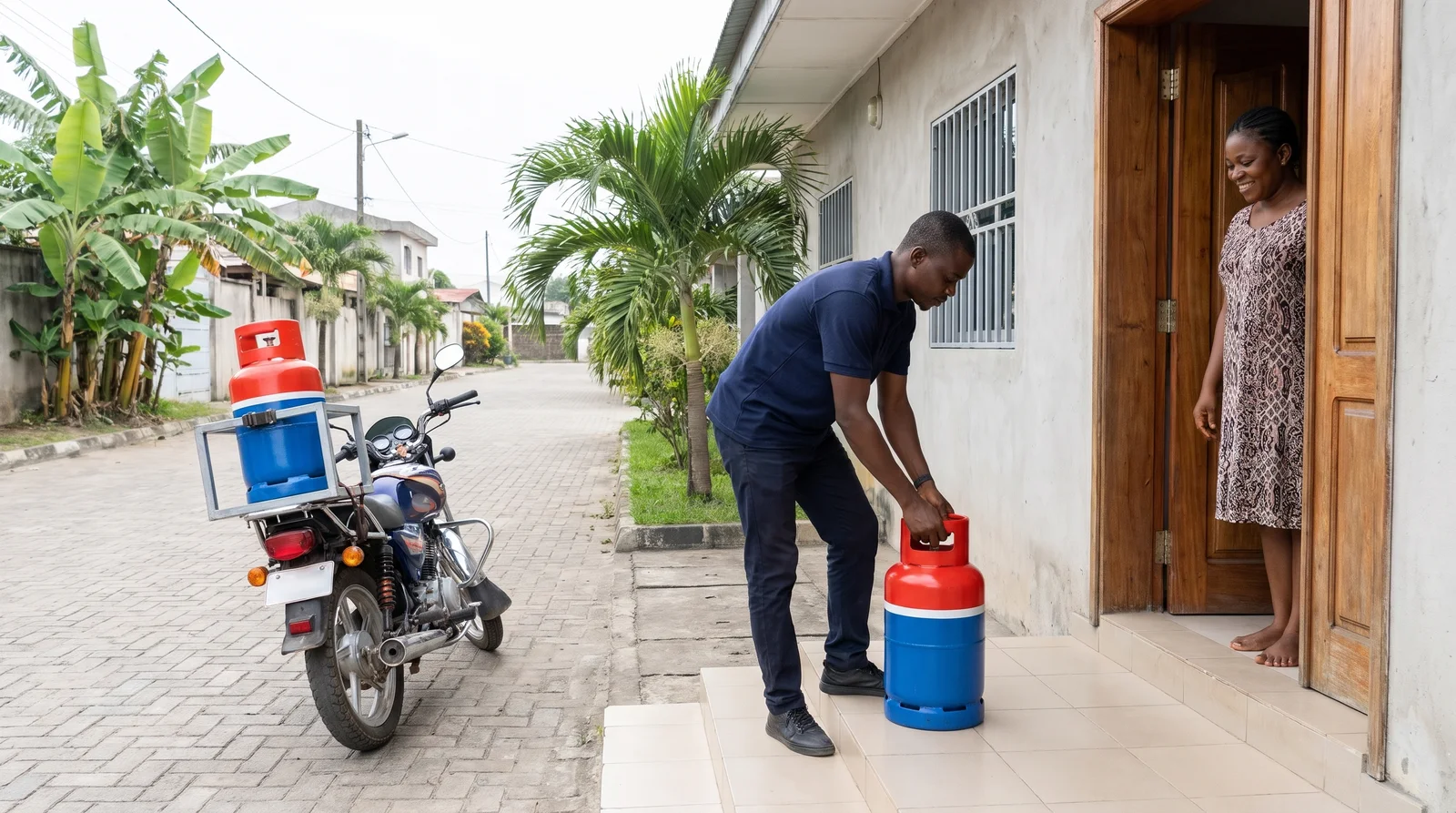 “Subsidise access, not consumption”: what Nigeria says about the refillAt the 16th NLCGA conference, in Abuja on 4 and 5 November 2026, Audrey Joe-Ezigbo (Falcon Corporation) proposed subsidising access to gas rather than its consumption, and judging every programme by one measure: does the household that was helped still refill its cylinder, on its own, 24 to 36 months after support ends. On 21 November, Anthony Agbo (Unigas) pointed out that 96% of Nigeria's LPG receipts in September came from domestic producers, with stock cover of 15.9 days against a 30-day minimum. In Cameroon, the press disagrees on the Bamenda gas filling centre, inaugurated on 9 May 2025. Everywhere, the missing figure is the refill at household level.
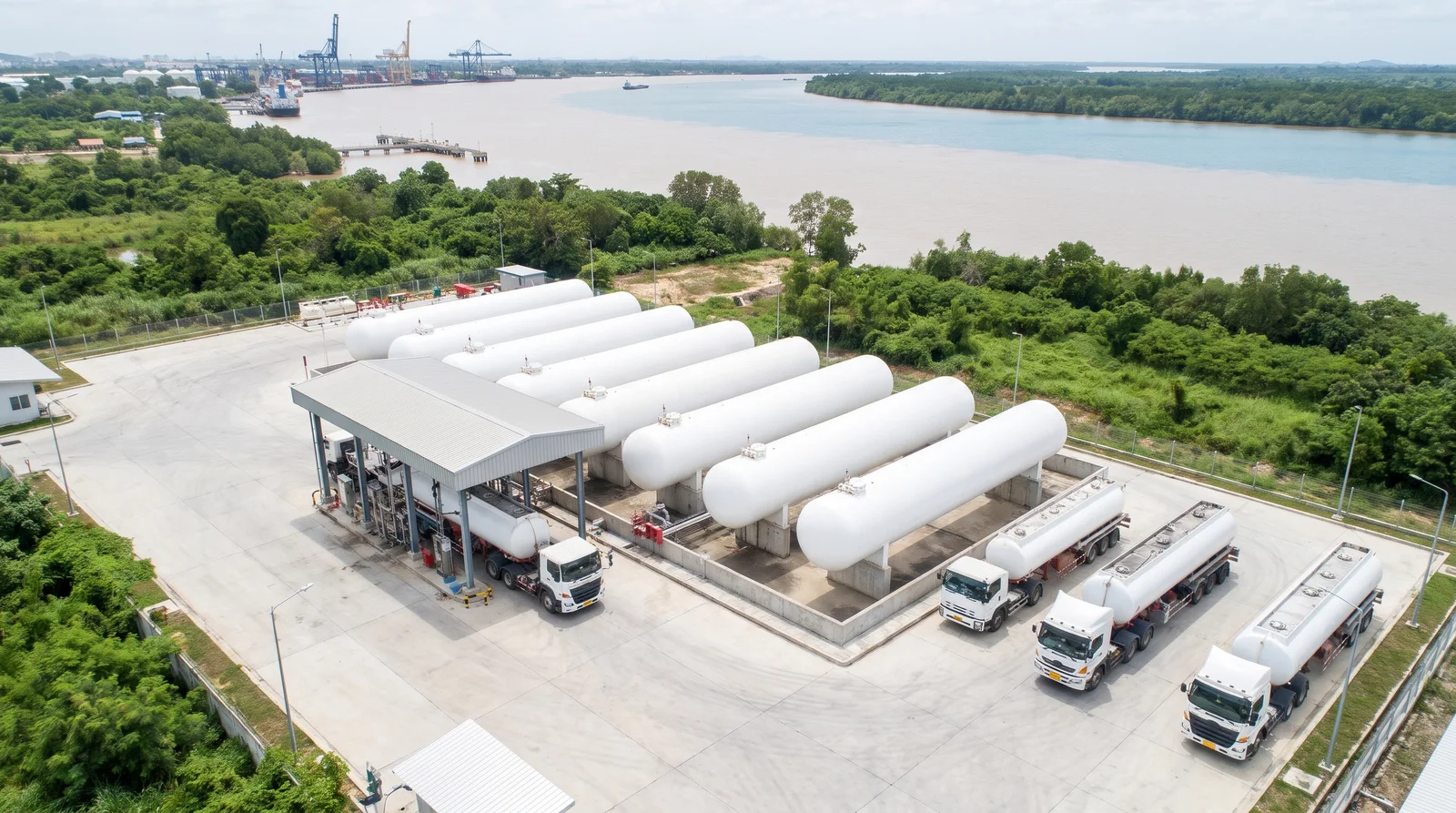 Bipaga at 200 tonnes, Bonabéri in thirty months: Cameroon's household gas between two supply chainsThe Bipaga plant, Cameroon's only local source of household gas, produced 200 tonnes of LPG in October 2026 according to data provided to Investir au Cameroun, against an average of 1,800 tonnes a month from May to September. On 11 November, SCDP held the kick-off meeting for the Bonabéri LPG hub, due to be operational in a little under thirty months, and on 12 November it called the foundation stone of the Kribi terminal imminent. Until then, the gas in Cameroon's kitchens arrives almost entirely by ship and goes through today's depots.